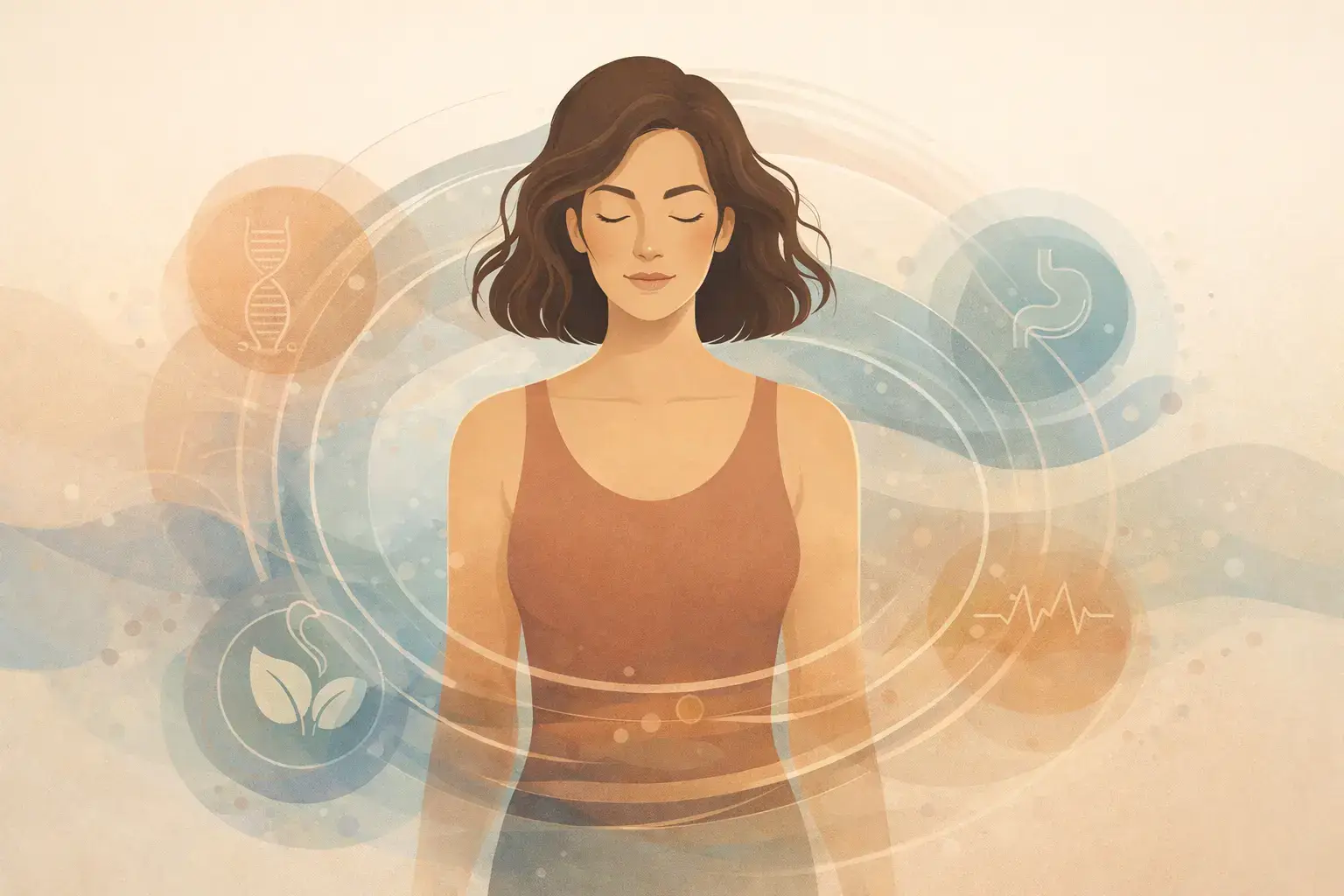
Most health advice was designed for a body that does not exist. A body that wakes up the same every day. A body with stable hormones. A body that responds to stress, food, sleep, and exercise in predictable ways. That body is not a woman’s body. Women do not run on a flat biological line, we run on cycles, waves, and seasons. Our metabolism, insulin sensitivity, inflammation, brain chemistry, gut function, and even how we detoxify hormones change across the month, across pregnancies, across perimenopause, and across menopause.
A woman is never the same body twice in a month. The week after her period, her cells burn glucose differently. During ovulation, her immune system shifts. In the luteal phase, her brain chemistry changes. In perimenopause, her estrogen and progesterone stop moving in predictable patterns. Yet most medical and nutritional advice treats women as if we are biologically static, as if we live in a permanent hormonal Monday. Eat the same. Train the same. Fast the same. Push the same. This mismatch is not small. It is the root of why so many women feel exhausted, inflamed, anxious, or stuck in their bodies. This is where nutrigenomics becomes quietly revolutionary for women. Not because women are fragile, but because we are dynamic.The Invisible Work Your Body Is Doing Every Day
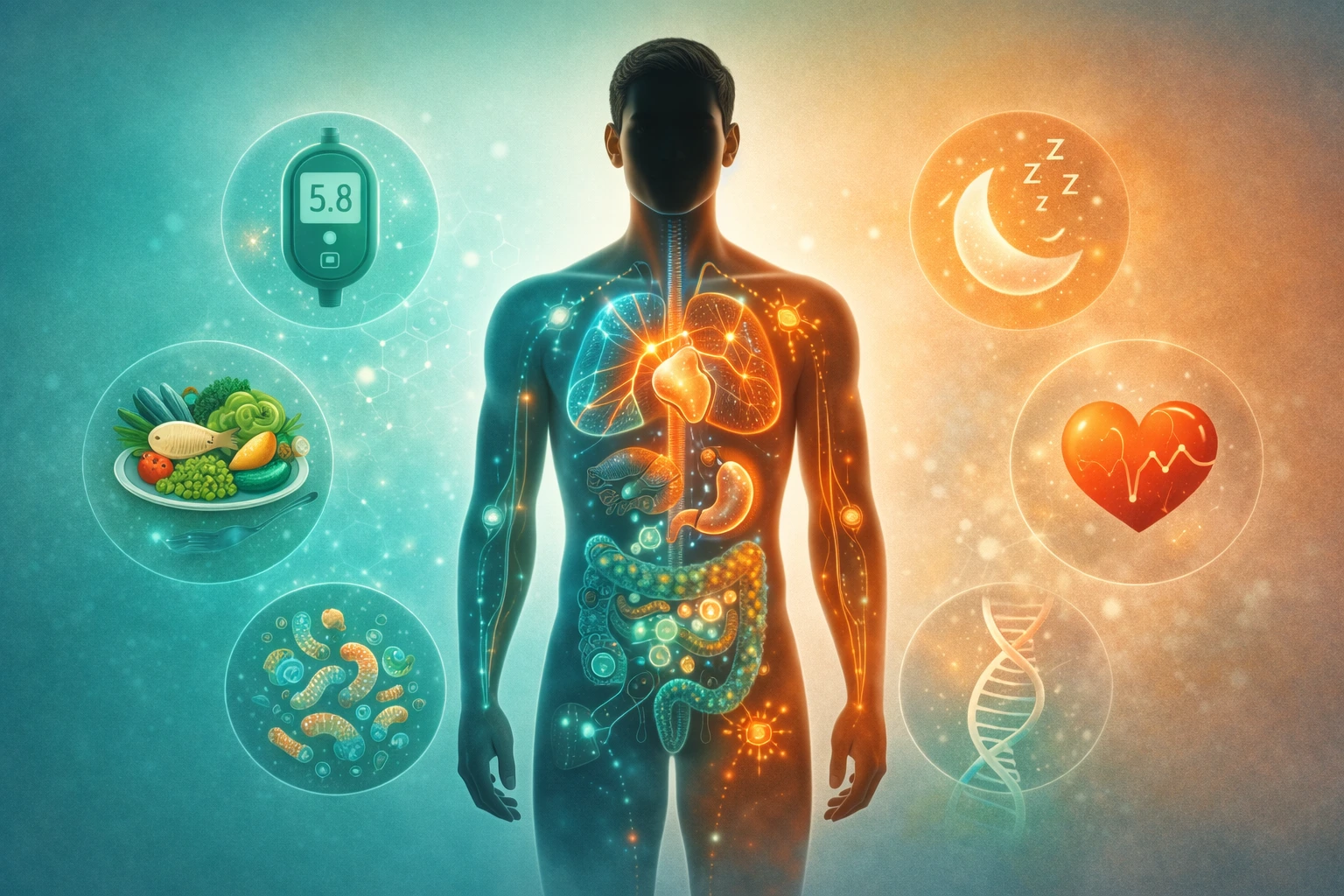
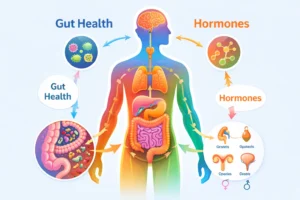
A woman’s body is doing far more behind the scenes than we are taught to notice. Every single month, your liver must process surges of estrogen and progesterone. These hormones do not just disappear they must be metabolized, detoxified, and cleared. If this process is slow, estrogen gets recycled back into your bloodstream, silently affecting your breasts, skin, uterus, brain, and fat tissue. Your gut decides how much of that estrogen gets excreted or reabsorbed. Your microbiome literally controls your hormonal balance. Your brain must adapt to fluctuating serotonin, dopamine, and GABA. Your immune system constantly recalibrates itself across the cycle. Your thyroid and adrenal glands shift their output based on stress and sleep. This is a biochemical ballet. When this system is in sync, you feel: Clear Energetic Emotionally steady Resilient to stress When it is not, you don’t get one dramatic diagnosis, you get a thousand whispers:
- Weight gain that doesn’t respond to dieting
- PMS that slowly becomes PMDD
- Brain fog
- Anxiety
- Thyroid fluctuations
- Hair thinning
- Sugar cravings
- Fatigue
- Gut issues
- Skin problems
You’re told these are “normal female problems.” They’re not. They are signs of a body that is working very hard and struggling to adapt to the biology it was given.
The Problem With One Size Fits All Nutrition
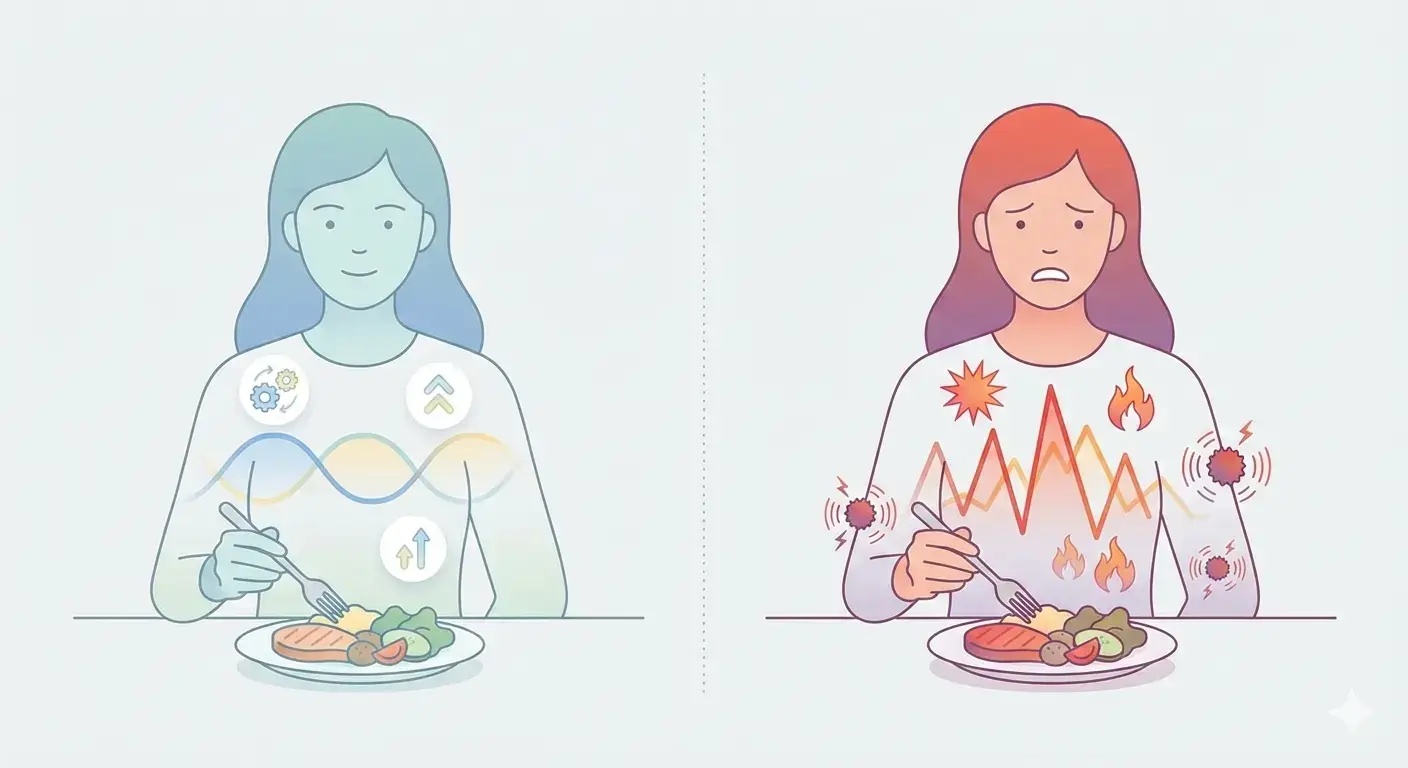
Most nutrition plans are built on two assumptions:
- Everyone processes food the same way
- Everyone responds to stress the same way
Women’s biology does not operate through a single pathway. Metabolic health, hormonal balance, micronutrient status, thyroid function, body composition, and inflammation work together to shape how the female body adapts across life stages.
Our pillar guide, Women’s Health Explained: 6 Core Factors That Influence Hormones, Metabolism & Long-Term Health, breaks down these interconnected systems and explains why addressing them together creates more sustainable and predictable health outcomes for women.
Women’s health cannot be understood through a single lens. Metabolic health, hormonal balance, nutrient status, thyroid function, and inflammation are deeply interconnected and influence how the female body adapts across different life stages.
In our comprehensive pillar guide, Women’s Health Explained: Why Women Need a Different Model of Health, we break down the core biological factors that shape long-term women’s health and explain why a personalised, root-cause approach is essential.
Many common women’s health challenges are closely linked to metabolic dysfunction. Conditions such as insulin resistance often develop silently and play a central role in weight gain, fatigue, and hormonal imbalance. Insulin resistance is also a key driver behind PCOS , where disrupted blood sugar regulation directly affects ovulation, androgen levels, and menstrual regularity.
Micronutrient status further shapes how the body copes with hormonal and metabolic stress. Deficiencies such as vitamin D deficiency can worsen inflammation, insulin sensitivity, immune function, and mood—often compounding existing symptoms rather than acting in isolation.
This is why generic diet plans frequently fail women. Weight loss, energy levels, and metabolic resilience are strongly influenced by genetics, hormone dynamics, and nutrient absorption. Our guide on DNA-based diet for weight loss for Indian women explains how nutrigenomics helps align nutrition with a woman’s unique biology instead of forcing the body to follow averages.
What Nutrigenomics Actually Gives Women
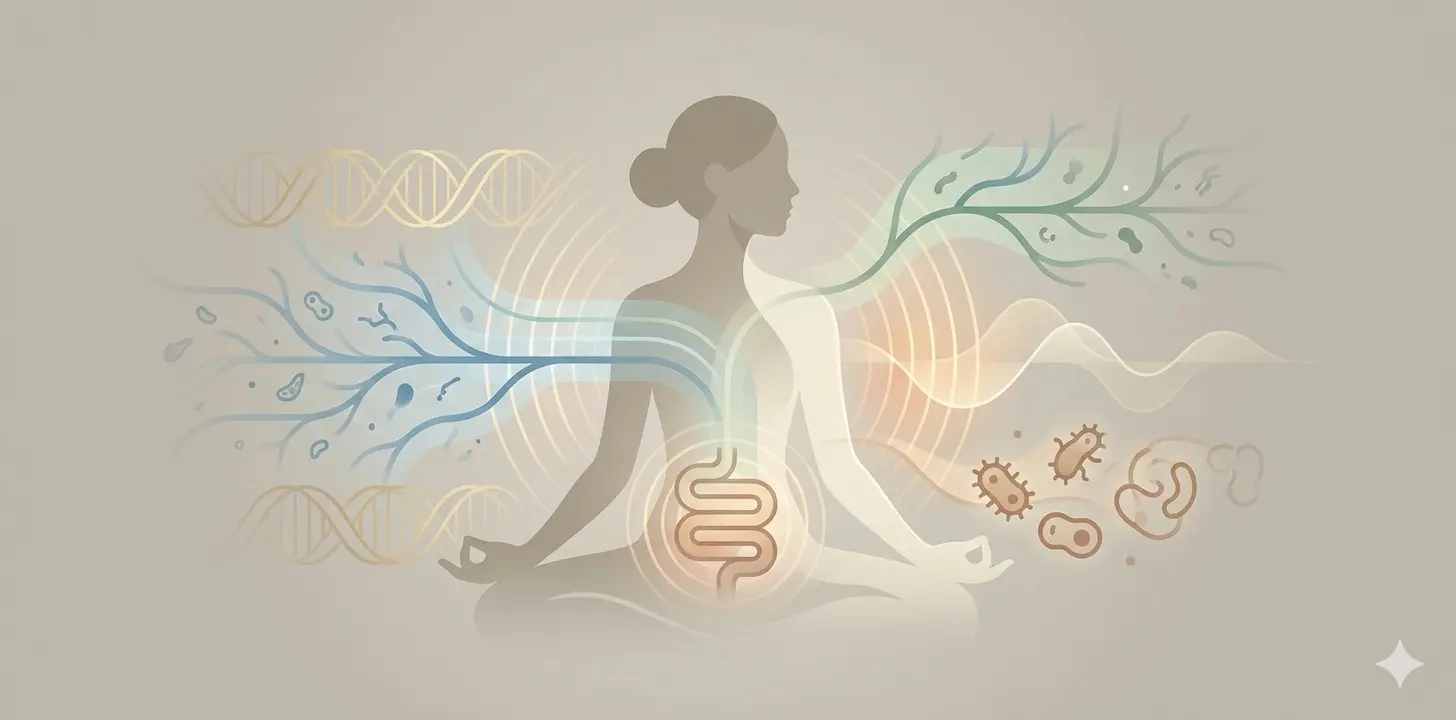
Nutrigenomics does not tell you what disease you will get. It tells you how your body handles life. It shows how your genes influence:
- Insulin sensitivity
- Fat storage
- Inflammation
- Estrogen metabolism
- Detoxification
- Vitamin and mineral absorption
- Stress response
- Gut barrier strength
For a woman, this is not abstract data. This is the blueprint of how well her body can adapt to:
- Periods
- Pregnancy
- Birth control
- IVF
- Perimenopause
- Menopause
- Work stress
- Sleep deprivation
- Emotional load
Why Women Feel Like Their Bodies Are “Against Them”
So many women quietly believe, “My body is broken.” “I’m doing everything right but nothing works.” “I must be lazy or undisciplined.” What is actually happening is much kinder — and much more frustrating. Your body is not malfunctioning. It is following instructions. Those instructions were written in your DNA. If your genes say “hold onto fat during stress,” no amount of calorie counting will override that. If your genes say “poor folate processing,” no amount of spinach will fix your fatigue. If your genes say “slow estrogen detox,” no amount of skincare will clear hormonal acne. Your body is doing exactly what it was designed to do. You don’t need more discipline. You need alignment.
Nutrigenomics Is Not About Control, It’s About Permission

This is what makes nutrigenomics especially powerful for women. It doesn’t tell you to push harder. It gives you permission to stop fighting your body. It explains, why fasting helps your friend but harms you, why keto works for one woman and crashes another, why coffee energizes one woman and gives another anxiety, why two women on the same diet get opposite results. When you see your genetic blueprint, shame disappears. You stop asking, “What’s wrong with me?” You start asking, “What does my body need?” That shift alone changes everything. The most radical thing a woman can do is stop outsourcing her health to averages. Your biology is not average.Your hormones are not average. Your stress load is not average. Your life is not average. Nutrigenomics gives you a map, not of disease, but of potential. It shows you where your body is resilient. It shows you where it needs support. It helps you eat, supplement, train, and rest in a way that works with your cycles, not against them. And when a woman is in sync with her biology, something remarkable happens. She stops trying to fix herself. She starts working with herself. That’s not just better health. That’s a different relationship with your body entirely.
How we’ve changed lives of women at unlock.fit
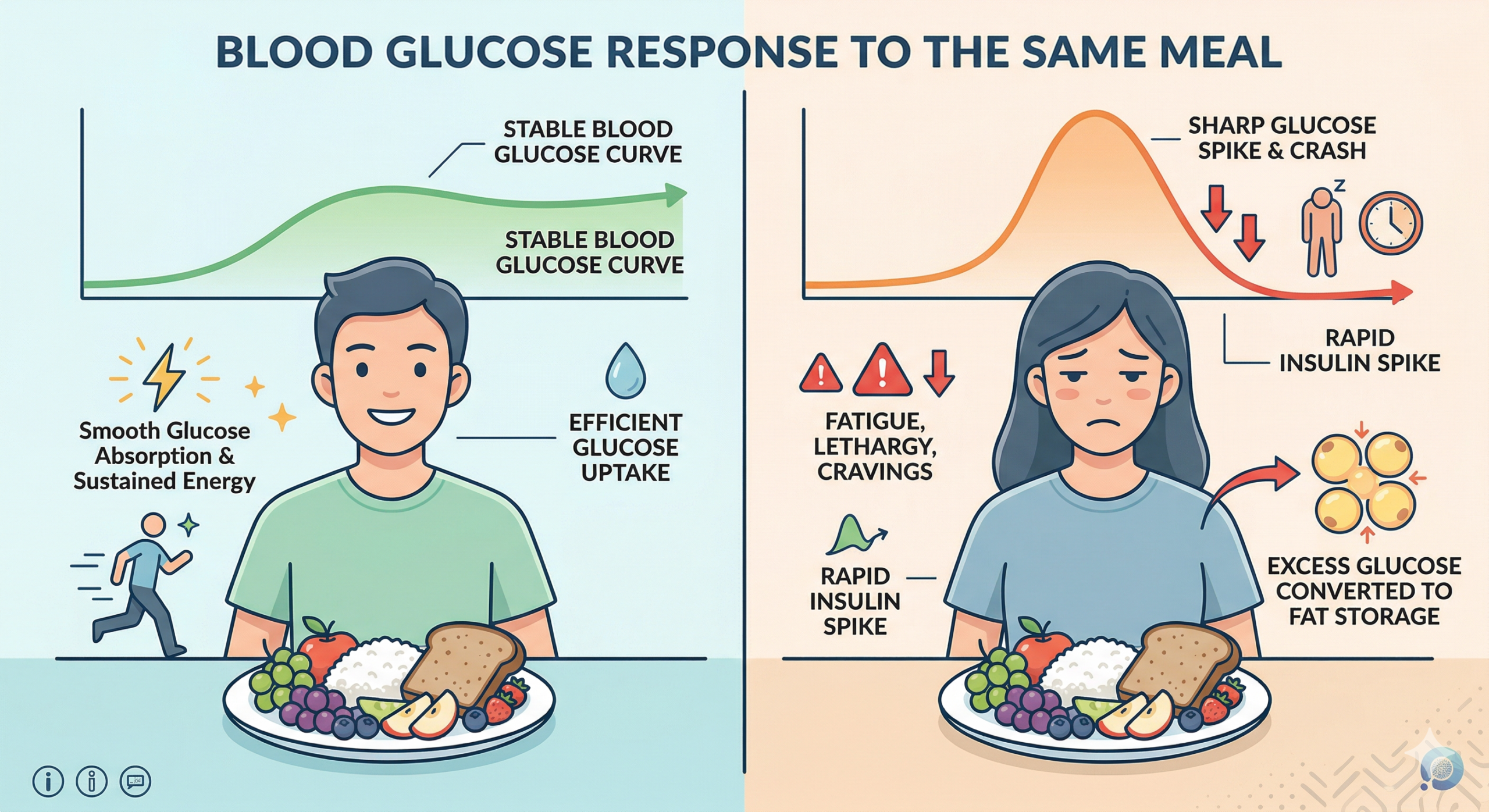
I see this in my practice every day at Unlock.fit. Not in theory, not in research papers. In real women who walk in feeling confused, stuck, and quietly exhausted from trying to “do everything right.” Many of them come in saying the same thing: “I eat clean.” “I work out.” “I’ve tried keto, fasting, and calorie counting.” “My reports are ‘normal.’” “So why do I still feel this way?” and in so many cases, the shift does not take months. It takes one consultation. Not because we magically fix everything, but because for the first time, their body finally makes sense. One of the most common stories we see is weight plateauing. A woman will have lost some weight initially, then suddenly everything stops. She eats less. She trains harder. The scale does not move or it moves in the wrong direction. She starts blaming herself. When we look at her nutrigenomics, something else becomes clear. Maybe her genes make her highly sensitive to cortisol, meaning stress tells her body to store fat, not burn it. Maybe her insulin signalling genes mean she spikes blood sugar even on “healthy” carbs. Maybe her fat-metabolism genes are slow, so her body struggles to switch from sugar-burning to fat-burning. So she is stuck doing things that feel disciplined, but are biologically wrong for her. We don’t tell her to try harder. We change the inputs:
- Adjust the macronutrients
- Modify meal timing
- Support micronutrients that control insulin and cortisol
- Shift exercise to match her genetic fat-burning profile
And suddenly the plateau breaks. Not because she pushed harder, but because her body was finally allowed to do what it was built to do. Another quiet heartbreak we see often is unexplained infertility. Women are told: Your hormones are okay. Your scans are normal. Just keep trying. But nutrigenomics shows something blood tests often don’t. Some women have genes that impair how they convert folate into its active form, crucial for egg quality, implantation, and early embryonic development. Some have higher oxidative stress in their ovaries. Some have inflammation that silently disrupts ovulation. Some cannot detox estrogen efficiently, affecting the uterine environment. These women don’t need “luck.” They need targeted nutrition. When we correct:
- Methylated B vitamins
- Antioxidants for egg health
- Minerals that regulate ovulation
- Inflammation modulating nutrients
We often see cycles regulated. We see ovulation improve. We see pregnancies happen, sometimes after years of trying. Not because of miracles but because biology was finally supported.
Why One Consultation Can Change Everything
What shocks most women is how quickly clarity brings relief. When they finally see:
- Why they are tired
- Why they crave sugar
- Why their PMS is intense
- Why their weight behaves strangely
- Why their skin flares
- Why their moods swing
Final Takeaway
If any part of this resonated with you, a free consultation can be a powerful first step. Not to be told what to do, but to finally understand why your body responds the way it does. During this session, we look at your health history, symptoms, lifestyle, to identify the patterns behind fatigue, weight struggles, hormonal symptoms, or stalled progress. Many women say this is the first time their experiences truly make sense. If you’re ready to stop guessing and start working with your biology, you can book a free consultation with the Unlock.fit team and begin building a health plan designed for your body, not an average one.

Tavleen
Meet Tavleen, a "human coder" driven by an insatiable passion for genetics that's anything but ordinary. She believes that real change starts at the roots of who we are, and that's precisely why she delved headfirst into the intricate world of Nutrigenomics during her pursuit of a master's degree. But Tavleen's journey doesn't stop there – she's a biohacker extraordinaire, dedicated to unraveling the secrets of how the food we consume can spark astonishing transformations within the tiniest corners of our bodies. Get ready to embark on a captivating exploration of the intersection between genetics, nutrition, and the endless possibilities it holds. Tavleen's unique perspective promises to shed light on the awe-inspiring world of personalised health, and you won't want to miss a single word of her exciting discoveries.