What Is the Hormonal Web That Influences Women’s Energy, Weight, and Well-Being?
Stress is no longer an occasional experience. For many women, it has become a constant background state deadlines, caregiving, career pressure, irregular meals, poor sleep, and emotional load all quietly add up. While it may feel like stress is only “in the mind,” the body experiences it as a powerful biological signal.
At the center of this response lies a complex triangle: stress hormones, metabolic hormones, and reproductive hormones. Cortisol, insulin, thyroid hormones, estrogen, and progesterone are in continuous conversation with each other. When one of them shifts, the others adapt in response.
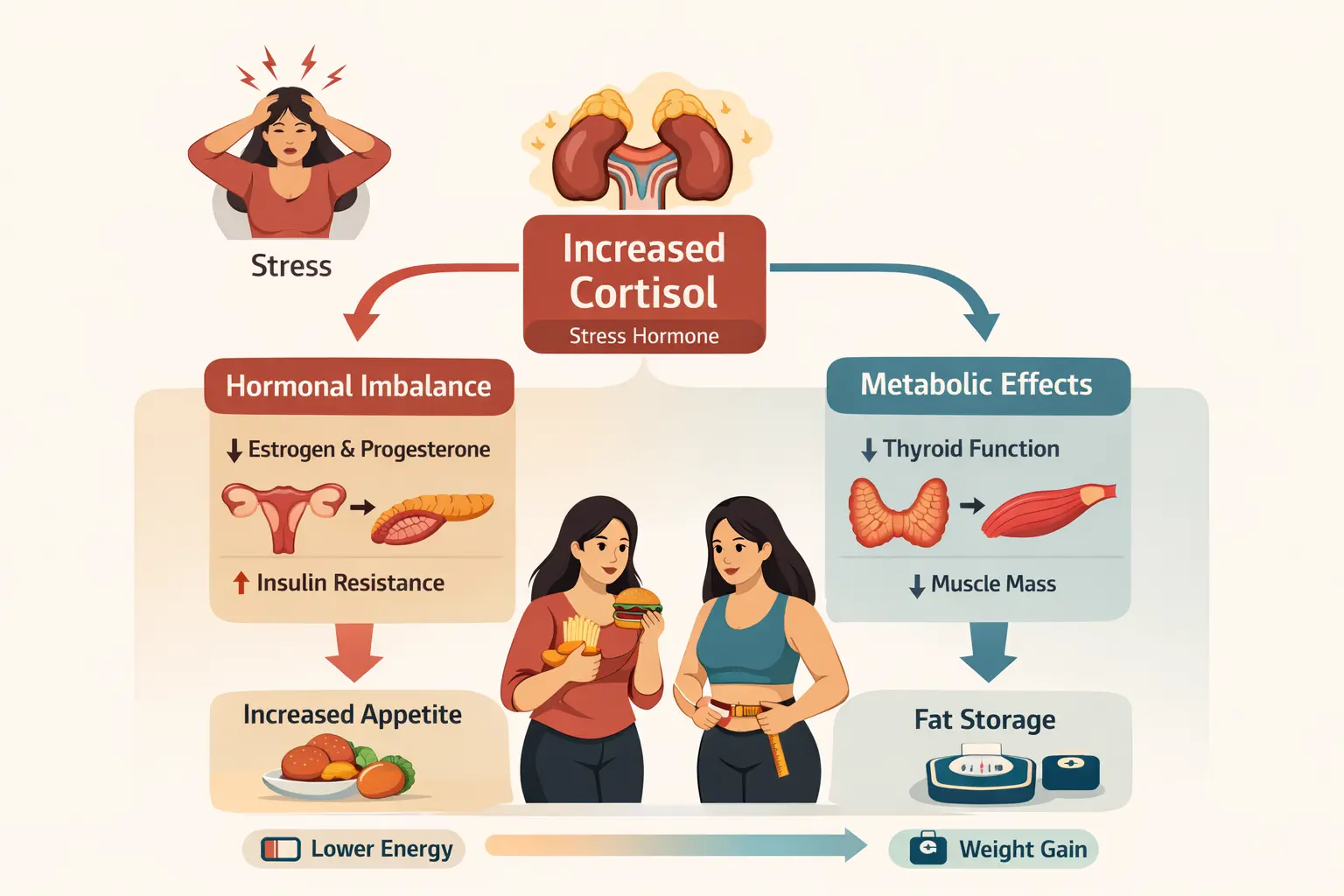
Cortisol, often called the stress hormone, is essential for survival. It helps the body wake up, stay alert and respond to danger. But when stress becomes chronic, cortisol remains elevated for long periods. This constant hormonal signal can slowly reshape metabolism affecting how the body stores fat, regulates appetite, maintains blood sugar, and supports reproductive health.
Chronic stress and elevated cortisol are deeply connected to broader women’s health core factors, including hormonal balance, metabolic health, inflammation, and thyroid regulation.
In women, this connection is especially delicate. Unlike men, women’s bodies are deeply influenced by cyclical hormonal changes, and stress can disrupt this rhythm in subtle but significant ways. Over time, the effects may show up as fatigue, weight gain, irregular cycles, cravings, and brain fog symptoms that often feel disconnected but share a common root.
Quick Answer: Chronic stress elevates cortisol levels, which disrupts the balance of metabolic and reproductive hormones in women. This hormonal imbalance can lead to symptoms such as fatigue, weight gain (especially abdominal fat), insulin resistance, and irregular menstrual cycles. Supporting hormonal health through balanced nutrition, adequate sleep, stress management, and personalized insights from DNA and blood tests can improve metabolic function and overall well-being.
How Does Stress Affect Women’s Hormones and Metabolism?
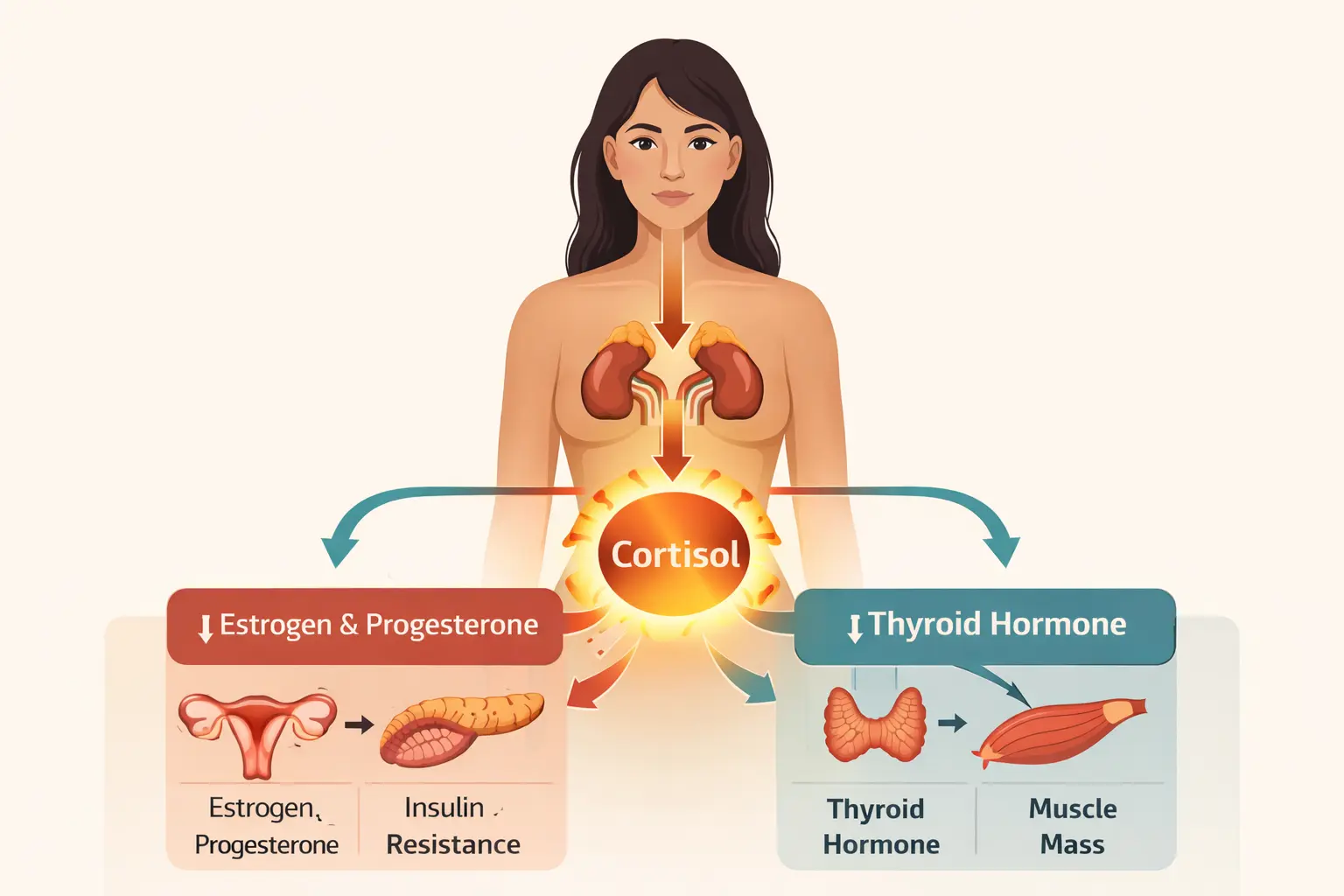
When the body perceives stress, the brain signals the adrenal glands to release cortisol. This is a protective mechanism designed to help us cope with challenges. In short bursts, cortisol is helpful; it increases focus, mobilises energy, and helps the body respond quickly. But when stress is continuous, the body never fully returns to a calm state. Cortisol levels stay elevated, and this begins to interfere with other hormonal systems.
The term “adrenal fatigue” is commonly used to describe the feeling of being constantly tired, wired, and unable to cope. While this term is not recognized as a clinical diagnosis, it reflects a real pattern of stress-response dysregulation. Over time, the body may struggle to maintain healthy cortisol rhythms, leading to energy crashes, mood fluctuations, and metabolic changes.
In women, chronic stress can disrupt the communication between the brain and reproductive system. The body prioritizes survival over reproduction, which can lead to:
- Irregular menstrual cycles
- Increased PMS symptoms
- Delayed ovulation
- Mood swings and irritability
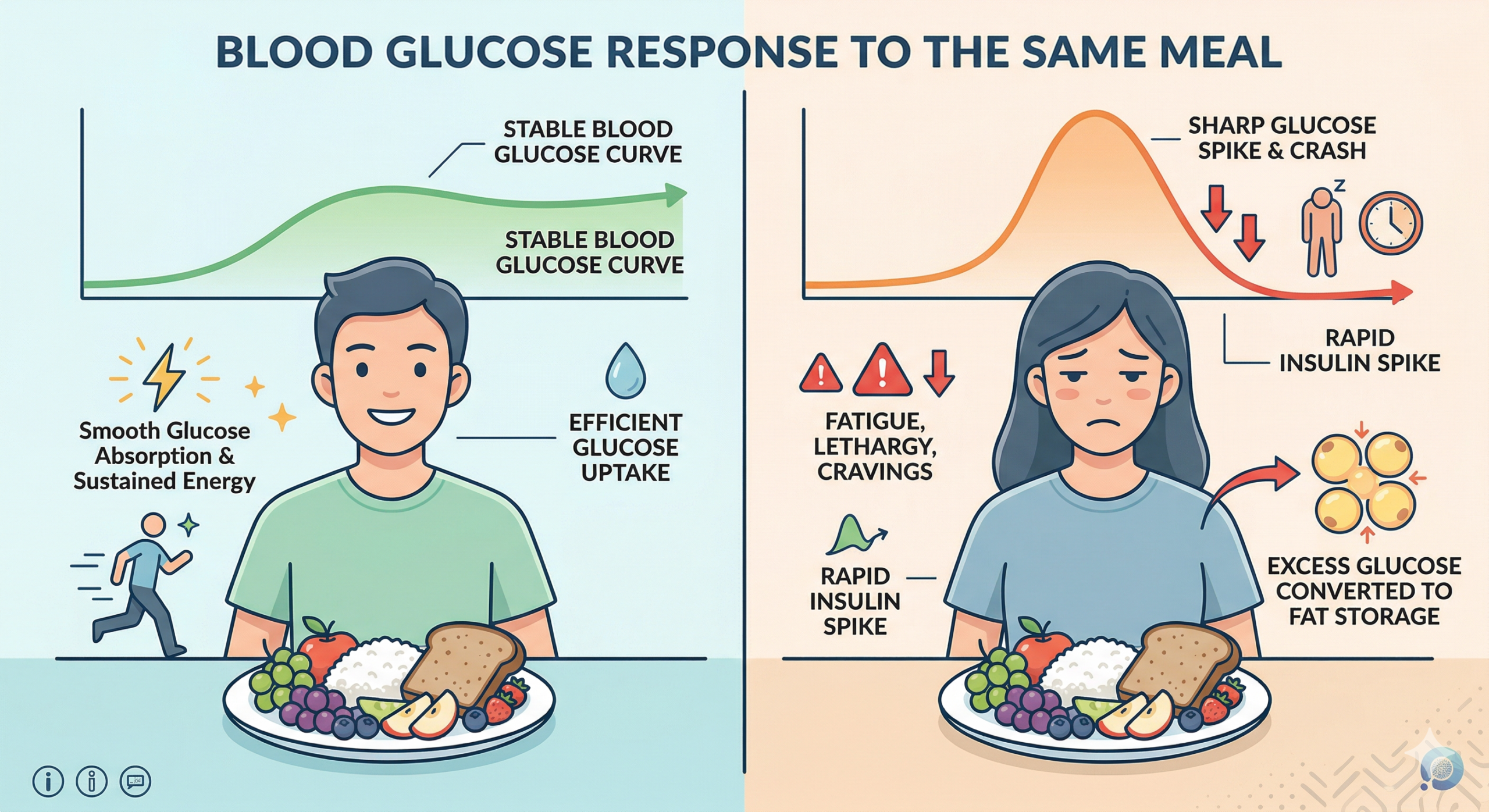
Cortisol also influences insulin, the hormone responsible for managing blood sugar. When cortisol remains high, the body may become more resistant to insulin, leading to frequent sugar cravings and energy crashes.
Another important effect is on fat storage. Elevated cortisol signals the body to store fat, especially around the abdominal area. This is an evolutionary response designed to ensure energy availability during prolonged stress. However, in modern life, this often translates into stubborn belly weight that feels difficult to lose despite efforts.
Stress can also impact thyroid hormone function. Even if thyroid test results fall within the normal range, chronic stress may slow the conversion of thyroid hormones into their active forms, contributing to low energy, cold intolerance, and metabolic slowdown.
Why Is Sleep Important for Hormonal Health and Stress Regulation?
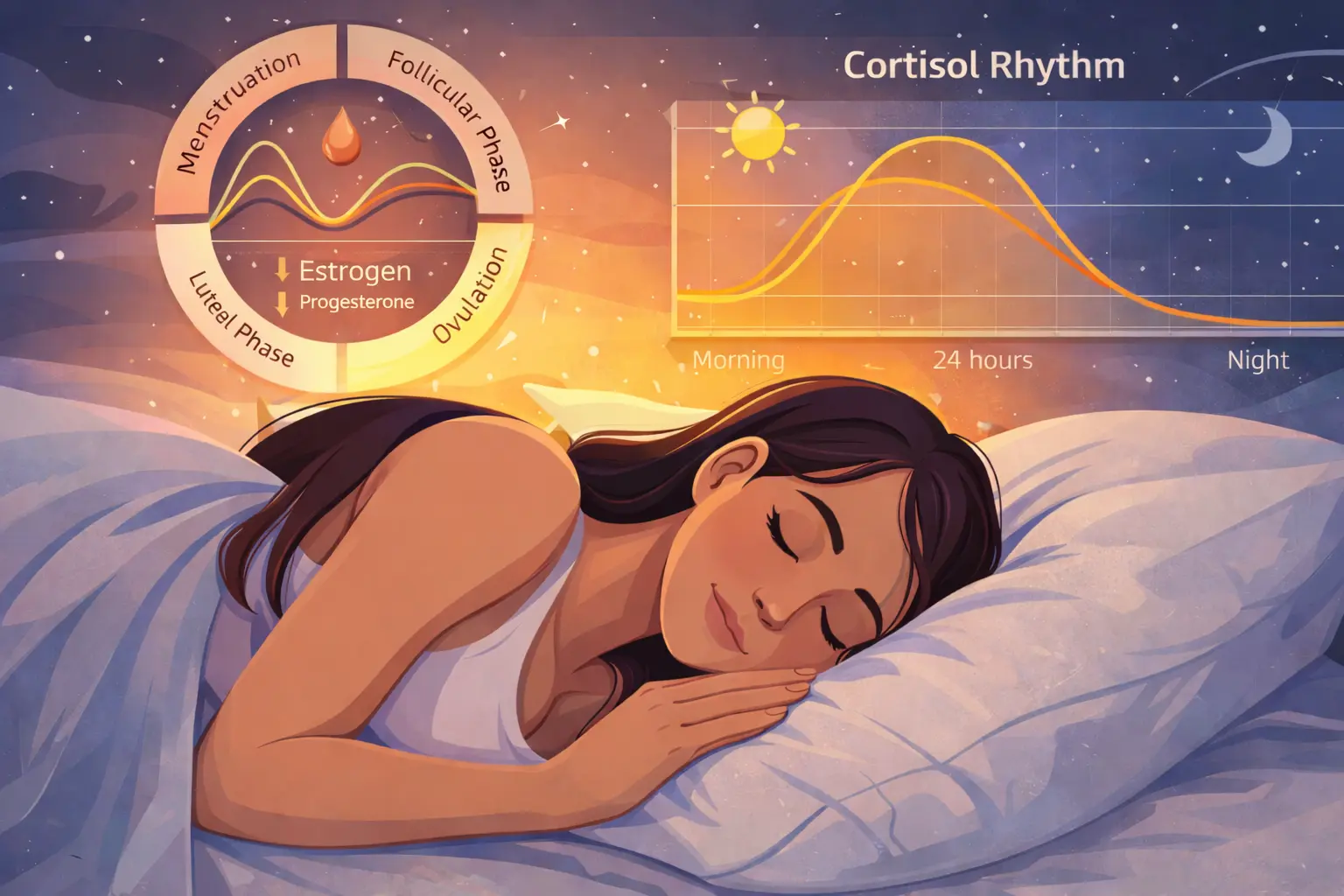
Sleep is one of the most powerful regulators of hormonal balance, yet it is often the most neglected. During sleep, the body repairs, restores, and resets hormonal rhythms. Cortisol naturally follows a daily cycle it rises in the morning to help us wake up and gradually declines throughout the day. Poor sleep disrupts this rhythm, keeping cortisol elevated when it should be falling.
Lack of sleep directly affects insulin sensitivity. When sleep is compromised, the body becomes less efficient at managing blood sugar. This can lead to higher glucose levels, stronger cravings, and increased fat storage over time.
Sleep also plays a major role in appetite regulation. Two key hormones are involved:
- Ghrelin, which signals hunger
- Leptin, which signals fullness
When sleep is inadequate, ghrelin levels increase and leptin levels decrease. This combination makes a person feel hungrier while reducing the feeling of satisfaction after eating. The result is often overeating, especially of high sugar and high carb foods.
Sleep deprivation also affects thyroid health. Chronic poor sleep can worsen fatigue, lower mood, and slow metabolic function. Many women experience a cycle where stress disrupts sleep, poor sleep worsens hormonal imbalance, and hormonal imbalance increases stress creating a loop that is hard to break.
What Are the Signs That Your Metabolism Is Under Stress?
The body rarely sends a single clear signal. Instead, it communicates through patterns and subtle changes. Many women sense that something is off but cannot pinpoint the reason. Some of the most common signs that metabolism is under stress include:
- Persistent fatigue that does not improve with rest
- Strong cravings for sugar, caffeine, or carbs
- Weight gain concentrated around the abdomen
- Difficulty losing weight despite diet and exercise
- Irregular or painful menstrual cycles
- Brain fog and reduced concentration
- Mood changes, irritability, or low motivation
These symptoms are often treated individually. Fatigue is blamed on lack of sleep, weight gain on diet, and mood swings on lifestyle. But in many cases, they are all connected through the body’s stress response.
When cortisol remains elevated, the body enters a protective mode. Energy is conserved, metabolism slows down, and fat storage increases. This is not a failure of discipline it is a biological adaptation.
| Signs of Metabolic Stress | Possible Hormonal/Metabolic Causes |
|---|---|
| Persistent fatigue | Elevated cortisol disrupting energy levels |
| Strong cravings for sugar | Insulin resistance due to high cortisol |
| Weight gain around abdomen | Increased fat storage from elevated cortisol |
| Difficulty losing weight | Metabolic slowdown from chronic stress |
| Irregular menstrual cycles | Disruption in reproductive hormones |
| Brain fog | Impaired cognitive function from hormonal imbalance |
| Mood changes | Emotional stress affecting neurotransmitters |
Which Nutrition Strategies Help Support Stress Hormones in Women?
Food has a direct and immediate impact on hormones. Balanced nutrition can help stabilize blood sugar, support energy levels, and reduce unnecessary stress signals within the body. One of the most important strategies is to avoid extreme dietary patterns that add more pressure to an already stressed system. For many women, skipping meals or eating very little during the day can increase cortisol levels and worsen cravings later.
Balanced meals that include protein, healthy fats, and complex carbohydrates help regulate blood sugar and prevent energy crashes. Protein supports muscle and metabolic health, while complex carbohydrates provide steady energy without sharp spikes in glucose.
Omega-3 fatty acids, found in foods like walnuts, flaxseeds, and fatty fish, support brain health and help reduce inflammation linked to chronic stress.
Magnesium rich foods such as leafy greens, seeds, nuts, and legumes can support the nervous system and may help with sleep quality and muscle relaxation.
At the same time, certain dietary habits can intensify the stress response:
- Excess caffeine can increase cortisol and worsen anxiety, especially in those sensitive to it
- High sugar intake leads to rapid energy spikes followed by crashes, reinforcing cravings
- Heavy late-night meals can disturb sleep and disrupt hormonal rhythms
Small, consistent changes are often more effective than drastic diets. Supporting the body gently helps it feel safe enough to restore balance.
| Beneficial Foods | Foods to Avoid |
|---|---|
| Lean proteins (chicken, fish) | Excessive caffeine |
| Healthy fats (avocado, nuts) | High sugar foods |
| Complex carbohydrates (quinoa, brown rice) | Heavy late-night meals |
| Omega-3 rich foods (salmon, flaxseeds) | Processed foods |
| Magnesium-rich foods (spinach, legumes) | Refined carbs |
How Can DNA and Blood Tests Provide Insights Into Stress and Metabolism?
Every woman responds to stress differently, and part of this difference is influenced by genetics. Some individuals are naturally more sensitive to stress signals, while others may metabolize caffeine slowly, making them more prone to sleep disturbances and anxiety.
DNA insights can help identify tendencies such as:
- Higher stress sensitivity
- Slower caffeine metabolism
- Greater likelihood of insulin resistance
- Differences in nutrient metabolism
These insights do not determine destiny, but they can help explain why some women feel more affected by stress than others.
Blood tests add another layer of understanding. Many symptoms linked to stress overlap with nutritional deficiencies and metabolic imbalances. Checking key markers can provide clarity:
- Vitamin D levels, which influence mood and immunity
- Vitamin B12 and iron levels, which affect energy and cognitive function
- Thyroid markers, which guide metabolic activity
- HbA1c, which reflects long-term blood sugar balance
If symptoms persist, reviewing blood tests for metabolic health can help identify underlying stress-related imbalances.
Together, DNA and blood data create a more complete picture of how stress is affecting the body internally. This allows for more personalized and targeted support.
| Genetic Markers/Blood Tests | Relevance to Stress and Metabolism |
|---|---|
| Stress sensitivity markers | Indicate how the body responds to stress |
| Caffeine metabolism genes | Help understand sleep disturbances |
| Insulin resistance markers | Guide dietary and lifestyle adjustments |
| Vitamin D levels | Influence mood and immune function |
| Thyroid function tests | Assess metabolic health |
What Is the Cortisol–Insulin Connection and How Does It Affect Weight?
One of the most overlooked effects of chronic stress is how strongly it influences insulin, the hormone that controls blood sugar. Cortisol and insulin are deeply connected. When stress levels rise, cortisol signals the body to release glucose into the bloodstream to provide quick energy.
When blood sugar stays elevated, insulin must work harder to bring it down. Over time, cells become less responsive to insulin, a state known as insulin resistance. This process builds gradually, often without obvious warning signs in the early stages. For many women, this shift shows up as:
- Strong cravings for sweets, especially in the evening
- Energy crashes after meals
- Difficulty losing weight despite efforts
- Increased fat storage around the waist
Cortisol tells the body, “We are in danger, store energy.” Insulin responds by storing more glucose as fat. Together, they create a pattern where the body becomes more efficient at storing and less efficient at burning.
How Does Stress Impact the Female Body’s Reproductive System?
Women’s bodies are biologically designed to be sensitive to environmental stress. From an evolutionary perspective, this sensitivity was protective. In times of danger or scarcity, the body would conserve energy and pause reproductive functions to ensure survival.
When stress is high, the body may:
- Delay ovulation
- Shorten or lengthen cycles
- Increase PMS symptoms
- Lower energy availability
The body is not malfunctioning. It is responding intelligently to perceived pressure. But modern stress is constant and invisible. Because the stress never fully ends, the body never fully relaxes. Over time, this state can leave women feeling like their bodies are working against them — slower metabolism, stubborn weight gain, and persistent fatigue.
What Is the Effect of Emotional Stress on Metabolism and Digestion?
Not all stress is physical. Emotional stress has a powerful biological impact. Unprocessed emotional pressure whether from work, relationships, caregiving, or constant mental load keeps the nervous system in a state of alertness. Even if a person appears calm on the outside, the body may still be producing stress hormones internally.
This constant activation affects digestion, nutrient absorption, and appetite patterns. Many women notice they either overeat during stress or completely lose their appetite. Both responses are part of the same stress pathway. Chronic emotional stress can:
- Slow digestion
- Increase inflammation
- Disrupt gut health
- Increase cravings for comfort foods
Long-term cortisol elevation also disrupts the gut microbiome, influencing gut health and hormones.
The gut and brain are closely connected. When stress is high, the body prioritizes survival over digestion, which can contribute to bloating, discomfort, and poor nutrient absorption.
Why Is Belly Fat Often Linked to Chronic Stress in Women?
Many women specifically notice weight gain around the midsection during stressful phases of life. This pattern is not random. Abdominal fat cells are more sensitive to cortisol. When cortisol levels remain high, fat tends to accumulate in this area more easily. This type of fat is also closely linked to insulin resistance and metabolic imbalance.
The frustrating part is that traditional approaches eating less and exercising more may not always work in this situation. In fact, excessive dieting or intense exercise can sometimes increase stress hormones further.
For some women, supporting stress regulation becomes the missing piece in improving body composition and metabolic health.
What Are the Long-Term Health Risks of Ignoring Stress Signals?
Many women push through fatigue, cravings, and irregular cycles, assuming these are normal parts of a busy life. But when stress remains unaddressed for years, it can slowly influence long-term health. Chronic cortisol imbalance has been associated with:
- Higher risk of insulin resistance
- Increased inflammation
- Thyroid dysfunction
- Mood changes and burnout
- Greater difficulty maintaining healthy weight
These changes do not appear suddenly. They build gradually, which is why early signals are easy to ignore. The body often whispers before it starts to shout.
Which Non-Food Lifestyle Interventions Can Help Regulate Stress Hormones?
Movement (walking, yoga, strength) Regular movement is one of the most effective ways to regulate stress hormones. Gentle activities like walking and yoga help lower cortisol and support mental calmness. Strength training supports muscle mass, which plays an important role in metabolic health. The key is consistency rather than intensity. Excessive or extreme workouts, especially when the body is already stressed, can sometimes add to hormonal strain.
Sleep hygiene (consistent timing, screen limits, environment) Creating a stable sleep routine helps regulate the body’s internal clock. Going to bed and waking up at similar times daily supports natural cortisol rhythms. Limiting screen exposure before sleep, reducing late-night stimulation, and creating a calm sleeping environment can significantly improve sleep quality. Even small changes can have a meaningful impact on energy and mood.
Simple stress practices (breathing, journaling, social connection) The nervous system responds strongly to simple calming practices. Slow breathing can help shift the body from a stress state to a relaxation state. Journaling helps process emotions and reduce mental overload. Meaningful social connections provide emotional support and lower perceived stress. These practices do not remove stress completely, but they help the body recover faster and maintain balance.
How Can Women Reframe Their Metabolism From Control to Support?
A common mistake in health conversations is viewing metabolism as something that needs to be controlled or forced. Many women respond to metabolic changes by trying stricter diets, more intense workouts or cutting out entire food groups. But a stressed body does not respond well to pressure. It responds to safety.
When the body feels supported through regular meals, adequate sleep, gentle movement, and emotional balance, cortisol naturally stabilizes. As this happens, insulin sensitivity improves, energy levels increase, and metabolic processes begin to regulate more smoothly. This is not an overnight change. Hormonal systems move slowly. But small, consistent adjustments can create meaningful long-term shifts.
Why Is a Compassionate Perspective Important for Understanding Women’s Health?
Understanding the link between stress, cortisol, and metabolism changes the way we look at symptoms.
- Fatigue is not laziness.
- Cravings are not a lack of discipline.
- Weight gain is not always about overeating.
- Irregular cycles are not just random.
These are signals. When women begin to view their bodies through this lens, the focus shifts from fighting symptoms to understanding them. Instead of asking, “Why is my body not cooperating?” the question becomes, “What is my body trying to tell me?”
Women’s metabolism is not just about calories, exercise, or willpower. It is deeply influenced by stress, sleep, emotional load, and hormonal rhythms. When cortisol remains elevated for too long, it affects nearly every system in the body from energy production and fat storage to mood and reproductive health.
The goal is not to eliminate stress completely, that is unrealistic. The goal is to help the body become more resilient, so it can recover, adapt, and maintain balance even during demanding phases of life.
And that is where true metabolic health begins not with restriction or pressure, but with understanding, support, and care.
Final Takeaway
If stress, sleep, or metabolic concerns feel persistent, a personalised approach can help. A free consultation with unlock.fit can help you understand how your hormones, nutrition, and lifestyle interact — including insights from DNA and blood markers — to support long-term metabolic health.
Frequently Asked Questions
How does chronic stress affect women’s metabolism?
Chronic stress elevates cortisol, which disrupts hormonal balance, slows metabolism, and promotes fat storage, especially around the abdomen.
Can poor sleep worsen hormonal imbalances related to stress?
Yes, inadequate sleep disrupts cortisol rhythms and appetite hormones, leading to increased hunger, insulin resistance, and metabolic slowdown.
What are common signs that stress is impacting my metabolism?
Signs include persistent fatigue, sugar cravings, abdominal weight gain, irregular menstrual cycles, brain fog, and mood changes.
How can nutrition help manage stress hormones?
Balanced meals with protein, healthy fats, complex carbs, and nutrients like omega-3s and magnesium support stable blood sugar and reduce cortisol spikes.
Are genetic tests useful for understanding stress and metabolism?
Yes, DNA tests can reveal stress sensitivity and metabolism differences, helping tailor lifestyle and nutrition strategies for better hormonal balance.
What lifestyle changes can reduce the negative effects of stress on metabolism?
Regular gentle exercise, consistent sleep routines, stress-reducing practices like breathing and journaling, and social support can help regulate cortisol and improve metabolic health.

Tavleen
Meet Tavleen, a "human coder" driven by an insatiable passion for genetics that's anything but ordinary. She believes that real change starts at the roots of who we are, and that's precisely why she delved headfirst into the intricate world of Nutrigenomics during her pursuit of a master's degree. But Tavleen's journey doesn't stop there – she's a biohacker extraordinaire, dedicated to unraveling the secrets of how the food we consume can spark astonishing transformations within the tiniest corners of our bodies. Get ready to embark on a captivating exploration of the intersection between genetics, nutrition, and the endless possibilities it holds. Tavleen's unique perspective promises to shed light on the awe-inspiring world of personalised health, and you won't want to miss a single word of her exciting discoveries.