


Recovery Nutrition: The 3 R’s of Post-Workout Recovery (Rehydrate, Refuel, Repair)
Why Recovery Nutrition Is Important
Recovery nutrition is one of the most important—yet often overlooked—aspects of fitness and sports performance. Whether you are an athlete, gym-goer, or fitness enthusiast, your workout is incomplete without proper post-workout nutrition.
Any form of physical activity places the body under stress. During training, the body enters a breakdown phase, and actual muscle building and adaptation happen after the workout, not during it. Recovery nutrition provides the raw materials your body needs to rebuild, repair, and come back stronger—especially after strength training.
The 3 R’s of Recovery Nutrition
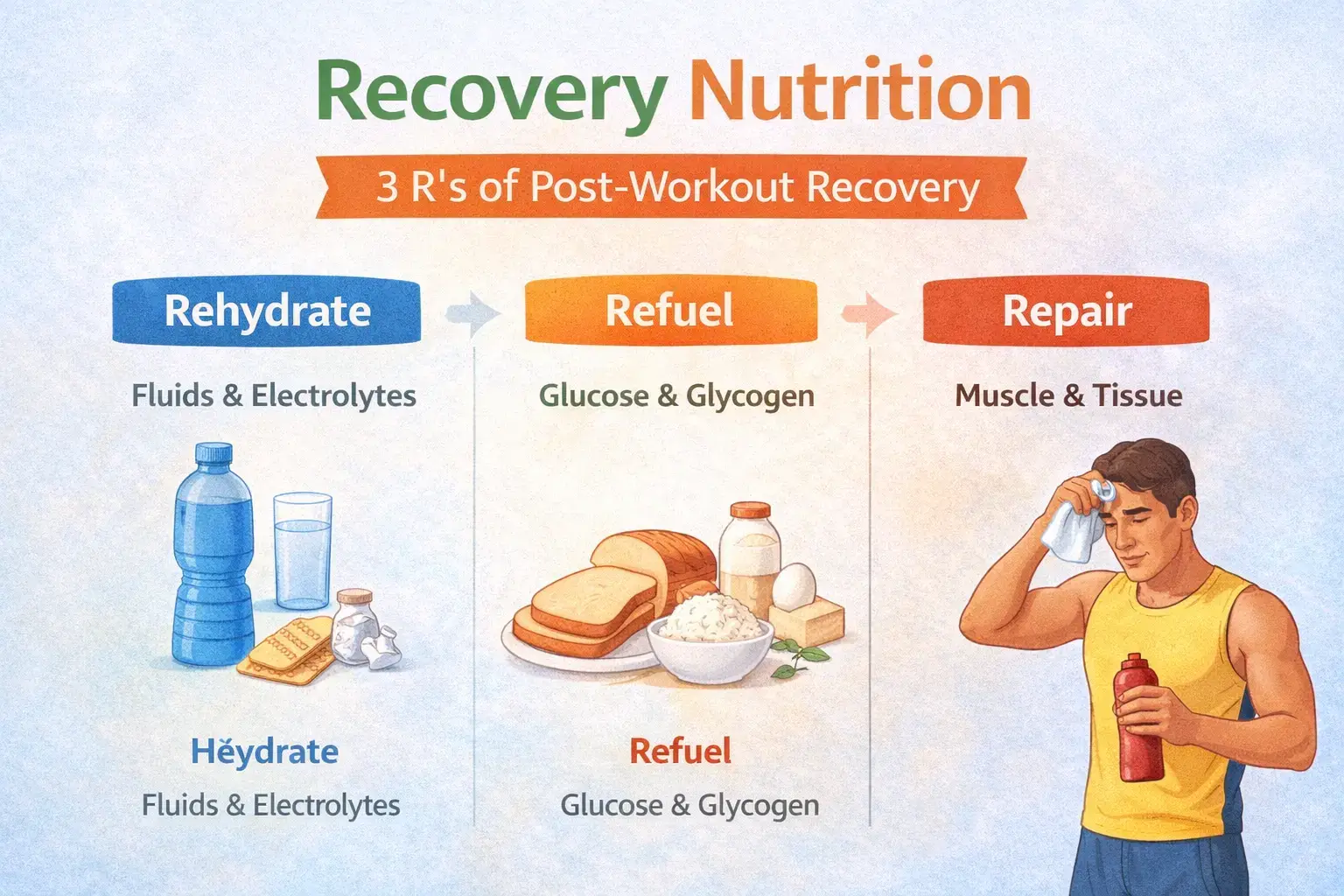
In this blog, we’ll understand recovery nutrition using the 3 R’s of recovery:
Rehydrate
Refuel
Repair
Rehydrate: Replace Fluids and Electrolytes
The primary goal of recovery nutrition is rehydration. During exercise, the body loses water through sweat—this happens not only in hot climates but also in cold environments. Cold air is dry and pulls moisture from the body, increasing fluid loss.
Proper rehydration helps:
Restore fluid balance
Support circulation
Improve recovery and performance in the next session
How much should you drink after a workout?
You should aim to consume about 150% of the fluid lost during exercise to fully rehydrate.
Since sweat also contains electrolytes—especially sodium—it’s important to replace them along with water.
Best rehydration options
Sports drinks: Replace fluids, electrolytes, and some energy
Plain water + salty snacks: Crackers, salted toast, or light savory foods
Flavored fluids: Useful for those who struggle to drink large volumes of plain water
Refuel: Restore Energy Stores
During workouts or sports activities, your body uses stored energy—primarily carbohydrates. Once exercise is complete, refueling these energy stores is essential to maximize training benefits.
Refueling helps:
Restore muscle glycogen
Reduce fatigue
Improve performance in subsequent sessions
The importance of carbohydrates
Carbohydrates are the body’s primary fuel source. After exercise, your muscles are especially receptive to absorbing nutrients—often referred to as the “post-workout window.”
Including fast-absorbing carbohydrates soon after training helps:
Speed up glycogen resynthesis
Support faster recovery
The exact carbohydrate requirement depends on:
Type of workout
Duration
Intensity
Frequency of training
Repair: Support Muscle Recovery and Growth
Intense training causes microscopic muscle damage and physiological stress. Repair is the process where the body fixes this wear and tear, making muscles stronger and more resilient.
Role of protein in recovery
Protein is essential for:
Muscle repair
Muscle growth
Supporting immune function
Consuming adequate quality protein after a workout stimulates muscle protein synthesis, especially when paired with carbohydrates.
Why combine carbs and protein?
Carbohydrates increase insulin secretion
Insulin helps transport nutrients into muscles
This combination improves both glycogen restoration and muscle repair
Best protein sources
Eggs
Chicken
Fish
Whey protein
Complete protein sources provide leucine, a key amino acid responsible for initiating muscle protein synthesis. Supplements like leucine or HMB can be used, but they are not necessary if your diet includes high-quality protein.
Additional Recovery Support
Beetroot juice: Improves blood flow due to vasodilation, helping flush metabolic waste
Antioxidants: Exercise increases oxidative stress; vitamins C and E help counter this
Anti-inflammatory support: Vitamin C also helps reduce inflammation
Glutathione: Can support antioxidant defenses when needed.
Recovery nutrition is not optional—it is a critical part of performance, muscle growth, and long-term fitness. By focusing on the 3 R’s of recovery—Rehydrate, Refuel, and Repair—you give your body the support it needs to adapt, recover efficiently, and perform better in every training session.
However, recovery needs are not the same for everyone. Factors like your sport, training intensity, body composition, metabolic health, and even genetics play a major role in determining what your body truly needs after exercise.
If you’re unsure whether your current recovery strategy is right for you, we recommend starting with a free consultation with our nutrition experts. During the consultation, we help you understand:
Your current recovery gaps
How to optimize post-workout nutrition for your goals
Whether a personalized nutrition or DNA-based plan can improve performance and recovery.
Book Your Free Consultation
Share this article

Nupur Sharma
Nupur Sharma is a Sports Nutritionist. She has a scientific approach towards nutrition. She passionately unfolds latent aspects linking nutritional science and sports performance so that athletes and fitness enthusiasts can achieve their highest potential. She holds a Master’s degree in Sports Nutrition and Bachelor’s degree in Food, Nutrition and Dietetics.